
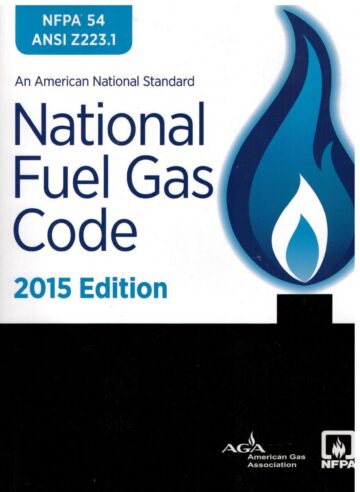
NFPA 54: National Fuel Gas Code, 2015 Edition
From carbon monoxide poisoning to the risks of fire and explosion, there are several hazards when it comes to using gaseous fuels. NFPA 54/ANSI Z223.1, National Fuel Gas Code, offers the latest comprehensive provisions for the safe design, installation, operation, maintenance, purging, and inspection of gas piping, equipment, accessories, and appliances supplied with fuel gas.
$203.99
Book Overview
In response to a devastating gas piping purging accident, NFPA 54 received an emergency Tentative Interim Amendment to the purging requirements in the 2009 edition. With minor editorial changes, the 2012 NFPA 54 presents new rules specifying the mandatory use of combustible gas indicators and detectors so employers can identify the presence of fuel gas. Significant changes improve safety and facilitate code application, such as a new bonding clamp location for corrugated stainless steel tubing (CSST) gas piping that clarifies bonding requirements added in the 2009 edition.
The code covers:
- Piping system design, materials, and components
- Pipe sizing and installing pipes underground, aboveground, and inside concealed spaces
- Piping inspection, testing, system leak check, and purging
- Requirements for process air and installation of appliances
- Minimum safe performance criteria, general requirements, and specifications for venting combustion products.
NFPA 54 applies to natural gas, manufactured gas, liquefied petroleum gas (LP-Gas), and gas-air mixtures. However, it does not cover systems operating at pressures over 125 psi for natural gas or 50 psi for propane. The latest edition, NFPA 54-2024, was approved by ANSI on November 1, 2023, and became available for purchase on January 26, 2024.
About NFPA
NFPA is known as the trusted source of safety knowledge, the National Fire Protection Association (NFPA) has been helping to solve some of the planet’s toughest safety problems for more than 125 years. To remain relevant for over a century as a knowledge and information organization, we’ve continually evolved our scope of expertise—from fire prevention, wildfire preparedness, and electrical safety to hazardous materials, community risk reduction, and public safety.
Other Works:
Specifications
| Weight | 2 lbs |
|---|---|
| Dimensions | 11 × 8.5 × 0.5 in |
- Publisher: NFPA
- Edition/Release Date: January 1, 2015
- ISBN: 9781455908912
- Pages: 169
- Format: Paperback
- Target Audience: Professional
Based on 0 reviews
Be the first to review “NFPA 54: National Fuel Gas Code, 2015 Edition”
Related products
-
Business and Law, Construction, Industries, Maryland, States
Maryland Business, Law and Project Management for Contractors Home Improvement Commission 7th Edition
 Business and Law, Construction, Industries, Maryland, States
Maryland Business, Law and Project Management for Contractors Home Improvement Commission 7th Edition
Maryland, Maryland Home Improvement Business and Project Management for Contractors, 7th edition is designed to provide an overview of business management subjects for general contractor examination candidates applying for a license from the Maryland Licensing Board.
SKU: 9781948558266 -
Business and Law, Construction, Industries, States, Virginia
Virginia, NASCLA Contractors Guide to Business and Project Management, 11th Edition
 Business and Law, Construction, Industries, States, Virginia
Virginia, NASCLA Contractors Guide to Business and Project Management, 11th Edition
Virginia, Business and Project Management for Contractors, Commercial Contractors edition is designed to provide an overview of business management subjects for general contractor examination candidates applying for a license from the Virginia Licensing Board.
SKU: 9781948558457 -
Alabama, Business and Law, Construction, Industries, States
Alabama, Contractors Guide to Business and Project Management, Residential 4th Edition
 Alabama, Business and Law, Construction, Industries, States
Alabama, Contractors Guide to Business and Project Management, Residential 4th Edition
Alabama, Business and Project Management for Contractors, General Contractors edition is designed to provide an overview of business management subjects for general contractor examination candidates applying for a license from the Alabama Licensing Board.
SKU: 9781948558204
There are no reviews yet.