
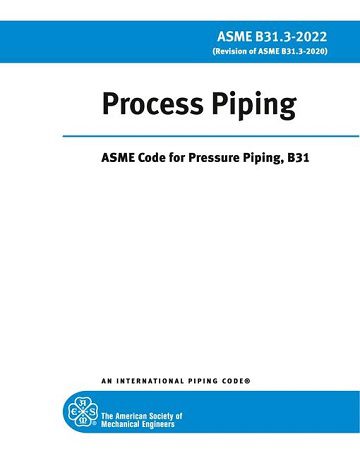
ASME B31.3 – 2022 Process Piping
ASME B31.3-2022 is the American standard for process piping systems, detailing design, materials, fabrication, inspection, and testing to ensure safe and reliable piping in industrial facilities.
Scope and Purpose
ASME B31.3 is part of the ASME B31 Code for Pressure Piping and specifically governs process piping used in industries such as:
Petroleum refining
Chemical and pharmaceutical manufacturing
Food and beverage processing
Semiconductor and cryogenic facilities
$879.99
Book Overview
ASME B31.3 contains requirements for piping typically found in petroleum refineries; chemical, pharmaceutical, hydrogen, textile, paper and pulp, power generation, semiconductor, and cryogenic plants; and related processing plants and terminals. It covers materials and components, design, fabrication, assembly, erection, examination, inspection, and testing of piping.
This Code applies to piping for all fluids including:
- raw, intermediate, and finished chemicals;
- petroleum products;
- gas, steam, air and water;
- fluidized solids;
- refrigerants; and
- cryogenic fluids.
Also included is piping that interconnects pieces or stages within a packaged equipment assembly.
Key changes to this revision include:
- Unlisted Valves (para. 307)
- Flexibility and Stress Intensification Factors (paras. 319 & 320)
- Impact Testing (paras. 323.2.2, 323.3.1)
- Flange Attachment Welds (para. 328.5.2)
- Heat Treatment (para. 330.1, 331.1)
- High Pressure Fluid Service Pressure Design (para. K302.3.2)
- High Pressure Fluid Service Fatigue Analysis (paras. K302.3, K304.8)
B31.3 is one of ASME’s most requested codes. It serves as a companion to ASME’s B31.1 Code on Power Piping as well as to the other codes in ASME’s B31 series. Together, they remain essential references for anyone engaged with piping.
Careful application of these B31 codes will help users to comply with applicable regulations within their jurisdictions, while achieving the operational, cost and safety benefits to be gained from the many industry best-practices detailed within these volumes.
Intended for manufacturers, users, constructors, designers, and others concerned with the design, fabrication, assembly, erection, examination, inspection, and testing of piping, plus all potential governing entities.
About ASME
The American Society of Mechanical Engineers (ASME) is a nonprofit professional organization founded in 1880 in the United States. It is dedicated to promoting the art, science, and practice of multidisciplinary engineering and allied sciences. ASME develops and publishes consensus-based codes and standards, many of which are globally recognized and widely used in mechanical engineering, energy systems, manufacturing, piping, pressure vessels, and more.
Other Works:
Specifications
| Weight | 5 lbs |
|---|---|
| Dimensions | 11 × 8.5 × 2 in |
- Publisher: American Society of Mechanical Engineers (ASME)
- Edition/Release Date: 2023
- ISBN: 9780791875346
- Pages: 587
- Dimensions: 8.5 x 11 inches
- Format: Paperback / Softbound
- Target Audience: Professionals
Based on 0 reviews
Be the first to review “ASME B31.3 – 2022 Process Piping”
Related products
-
Construction, Industries, States, West Virginia
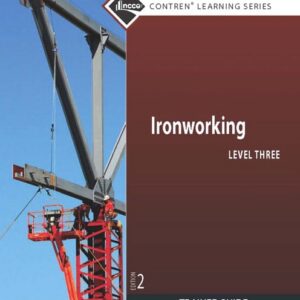
Ironworking Level 3 Trainee Guide, Paperback
Introduces welding and nondestructive testing codes and specifications that govern welding. Identifies the different types of weld imperfections and the nondestructive testing methods used to identify these imperfections.
SKU: 130309397 -
Business and Law, Construction, Industries, Maryland, States
Maryland, Home Improvement Salesperson Reference Guide 6th Edition
 Business and Law, Construction, Industries, Maryland, States
Maryland, Home Improvement Salesperson Reference Guide 6th Edition
Maryland, Home Improvement Salesperson Reference Manual Contractors edition is designed to provide an overview of business management subjects for general contractor examination candidates applying for a license from the Maryland Licensing Board.
SKU: 9781948558273 -
Business and Law, Construction, Industries, Ohio, States
Ohio, Contractors Guide to Business, Law and Project Management 4th Edition
 Business and Law, Construction, Industries, Ohio, States
Ohio, Contractors Guide to Business, Law and Project Management 4th Edition
Ohio, Business and Project Management for Contractors, General Contractors edition is designed to provide an overview of business management subjects for general contractor examination candidates applying for a license from the Ohio Licensing Board.
SKU: 9781948558426
There are no reviews yet.