
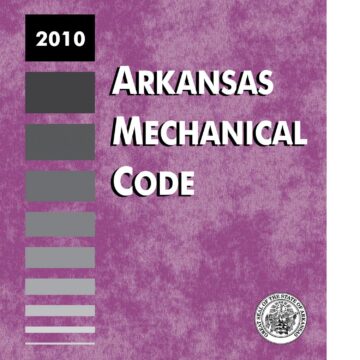
2010 Arkansas Mechanical Code
The 2010 Arkansas Mechanical Code is the state-adopted regulation that establishes minimum standards for the design, installation, maintenance, and inspection of mechanical systems in buildings throughout Arkansas. It is based on the International Mechanical Code (IMC) with state-specific amendments to address local climate conditions, enforcement practices, and administrative requirements.
$87.99
Book Overview
The 2010 Arkansas Mechanical Code plays a critical role in ensuring that mechanical systems in buildings operate safely and efficiently. By regulating HVAC and ventilation systems, it directly impacts occupant comfort, health, and safety while also helping reduce mechanical failures and energy waste. Its alignment with the International Mechanical Code ensures consistency with national standards while allowing Arkansas to tailor requirements to local conditions such as humidity, temperature extremes, and building practices. At its core, the code focuses on protecting public health and safety by regulating systems that control air quality, temperature, ventilation, and combustion processes. It establishes technical standards for equipment selection, system design, installation methods, and ongoing maintenance requirements. The code also ensures that mechanical systems operate efficiently and do not create hazards such as fire risks, carbon monoxide exposure, or poor indoor air quality.
Key Aspects and Highlights
HVAC System Design and Installation
-
- Regulates heating, cooling, and air distribution systems
- Requires proper sizing of equipment based on building load calculations
- Ensures compliance with manufacturer specifications and safety standards
Ventilation and Indoor Air Quality
-
- Establishes minimum ventilation rates for occupancies
- Requires mechanical or natural ventilation in enclosed spaces
- Helps control moisture, contaminants, and odors in buildings
Exhaust Systems
-
- Governs kitchen hoods, restroom exhaust, and industrial ventilation
- Requires proper discharge locations to avoid re-entrainment of pollutants
- Includes requirements for grease ducts and commercial cooking systems
Combustion Air and Fuel-Burning Appliances
-
- Ensures safe operation of gas-fired and oil-fired equipment
- Requires adequate combustion air supply to prevent backdrafting
- Addresses venting of flue gases and carbon monoxide control
Duct Systems and Air Distribution
-
- Sets standards for duct construction, sealing, and insulation
- Requires proper materials to reduce leakage and energy loss
- Regulates fire dampers and smoke control in ductwork systems
Refrigeration and Cooling Systems
-
- Includes safety requirements for refrigerant handling and piping
- Addresses pressure limits, leak prevention, and installation practices
Appliance Installation and Safety
-
- Governs installation of boilers, water heaters, furnaces, and HVAC units
- Requires clearances for fire safety and service access
- Ensures appliances meet listing and labeling standards
Inspections and Enforcement
-
- Requires mechanical permits before installation begins
- Mandates inspections at key construction stages
- Empowers code officials to approve or reject noncompliant systems
Energy Efficiency Coordination
-
- Supports proper system design for reduced energy consumption
- Works alongside energy codes to improve building performance
About ICC
The International Code Council (ICC) is a membership-based organization founded in 1994 through the consolidation of three regional building code groups in the United States. Its primary mission is to develop comprehensive, coordinated model codes that promote safe, sustainable, and resilient construction practices.
Other Works:
Specifications
| Weight | 3 lbs |
|---|---|
| Dimensions | 12 × 11 × 3 in |
- Publisher: International Code Council (ICC)
- Edition/Release Date: January 1, 2010
- ISBN: 978-1580019064
- Pages: 144
- Format: Paperback / Softbound
- Target Audience: Professionals
Based on 0 reviews
Be the first to review “2010 Arkansas Mechanical Code”
Related products
-
Business and Law, Construction, Industries, Ohio, States
Ohio, Contractors Guide to Business, Law and Project Management 4th Edition
 Business and Law, Construction, Industries, Ohio, States
Ohio, Contractors Guide to Business, Law and Project Management 4th Edition
Ohio, Business and Project Management for Contractors, General Contractors edition is designed to provide an overview of business management subjects for general contractor examination candidates applying for a license from the Ohio Licensing Board.
SKU: 9781948558426 -
Business and Law, Construction, Industries, Maryland, States
Maryland Business, Law and Project Management for Contractors Home Improvement Commission 7th Edition
 Business and Law, Construction, Industries, Maryland, States
Maryland Business, Law and Project Management for Contractors Home Improvement Commission 7th Edition
Maryland, Maryland Home Improvement Business and Project Management for Contractors, 7th edition is designed to provide an overview of business management subjects for general contractor examination candidates applying for a license from the Maryland Licensing Board.
SKU: 9781948558266 -
Alabama, Business and Law, Construction, Industries, States
Alabama, Business and Project Management, General Contractors, 3rd edition
 Alabama, Business and Law, Construction, Industries, States
Alabama, Business and Project Management, General Contractors, 3rd edition
Alabama, Business and Project Management for Contractors, General Contractors edition is designed to provide an overview of business management subjects for general contractor examination candidates applying for a license from the Alabama Licensing Board.
SKU: 9781934234556 -
Business and Law, Construction, Industries, South Carolina, States, Tabs
South Carolina Residential Business and Project Permanent Tabs
 Business and Law, Construction, Industries, South Carolina, States, Tabs
South Carolina Residential Business and Project Permanent Tabs
PERMANENT TABS PACKAGE – This package includes permanent tabs for all references allowed to be used during the exam.
•South Carolina, Contractor’s Guide to Business and Project Management
SKU: SCRESBLTABS
There are no reviews yet.