
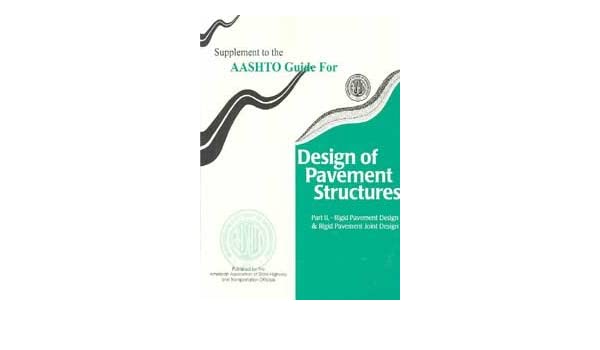
AASHTO Guide for Design of Pavement Structures, 4th Edition, Supplements
This supplement to the AASHTO Guide for Design of Pavement Structures includes alternative design procedures for use in place of or in conjunction with Part II, Pavement Design Procedures for New Construction or Reconstruction; Section 3.2, Rigid Pavement Design; and Section 3.3, Rigid Pavement Joint Design.
$89.99
Book Overview
The AASHTO Guide for Design of Pavement Structures, 4th Edition, Supplement is a comprehensive standard published by the American Association of State Highway and Transportation Officials that provides the foundational methodologies for designing and managing pavement infrastructure. Originally issued in 1993, with the supplemental procedures added in 1998, it supersedes the 1986 version. The guide covers four major parts: Pavement Design & Management Principles; Design Procedures for New Construction or Reconstruction; Rehabilitation Procedures for Existing Pavements; and Mechanistic‑Empirical Design Procedures. It includes detailed guidance on overlay design (with seven different overlay procedures), supports both flexible and rigid pavement types, and incorporates alternative rigid pavement and rigid pavement joint design methods via the supplement. With approximately 720 pages in its print format, GDPS‑4‑M helps engineers select materials, evaluate load‑bearing capacity, factor in economic trade‑offs, manage pavement rehabilitation, and ensure reliable performance under varying traffic loads and environmental conditions.
Key aspects:
- Comprehensive Pavement Design Framework
Covers both new pavement design and rehabilitation of existing roadways. - Multiple Design Methods
Includes empirical, mechanistic‑empirical, and overlay design approaches. - 1998 Supplement Enhancements
Adds alternative procedures for rigid pavement design and joint design. - Project-Level Pavement Management
Offers strategies for economic evaluation, life-cycle cost analysis, and design reliability. - Flexible and Rigid Pavement Focus
Provides detailed procedures tailored to both asphalt (flexible) and concrete (rigid) pavements. - Seven Overlay Design Procedures
Enables engineers to select appropriate methods for resurfacing or strengthening existing pavements. - Field Evaluation and Data Collection Guidance
Helps determine pavement condition and structural capacity through site data. - Environmental and Load Considerations
Considers traffic loads, climatic conditions, soil properties, and material performance. - Standardized by AASHTO
Widely used across the U.S. by DOTs, civil engineers, and transportation planners.
Highlights:
- Dual Focus on New and Existing Pavements: Provides design procedures for both new construction and rehabilitation projects.
- 1998 Supplement Enhancements: Introduces updated procedures for rigid pavement and joint design, addressing evolving industry needs.
- Project-Level Pavement Management Tools: Emphasizes life-cycle cost analysis, reliability-based design, and economic evaluation.
- Widely Adopted Standard: Serves as a foundational guide for state DOTs, municipal engineers, and transportation agencies across the U.S.
About AASHTO
The American Association of State Highway and Transportation Officials (AASHTO) is a nonprofit, nonpartisan organization founded in 1914 that represents highway and transportation departments from all 50 U.S. states, the District of Columbia, and Puerto Rico. AASHTO develops and publishes widely adopted technical standards, guidelines, and best practices for all aspects of transportation infrastructure—including highways, bridges, and public transit. Its work helps ensure the safety, efficiency, and sustainability of the nation’s transportation systems. AASHTO’s publications, such as the Green Book and the AASHTO Guide for Design of Pavement Structures, are considered authoritative references for engineers, planners, and government agencies.
Other Works:
Specifications
| Weight | 3 lbs |
|---|---|
| Dimensions | 11 × 8.5 × 1 in |
- Publisher: American Association of State Highway and Transportation Officials (AASHTO)
- Edition/Release Date: 4th Edition, January 1, 1998
- ISBN: 9781560510789
- Pages: 80
- Format: Paperback / Softbound
- Target Audience: Professionals
Based on 0 reviews
Be the first to review “AASHTO Guide for Design of Pavement Structures, 4th Edition, Supplements”
Related products
-
Code Books, Construction, Electrical, Industries, Nevada, States, Virginia, Washington D.C.
2011 National Electrical Code
 Code Books, Construction, Electrical, Industries, Nevada, States, Virginia, Washington D.C.
2011 National Electrical Code
NFPA 70®, National Electrical Code® (NEC®), is the authoritative document addressing electrical installations in residential, commercial, and industrial settings. The NEC is revised every three years to stay in sync with industry practices, emerging trends, and the development and introduction of technologies to provide comprehensive rules for designers, installers, inspectors, engineers, electricians, and anyone else who works in the electrical industry. The code is organized for ease of use.
SKU: 7011SB -
Construction, Industries, Plumbing, States, West Virginia
Pipefitting Level 3 Trainee Guide, Paperback, 4/E
 Construction, Industries, Plumbing, States, West Virginia
Pipefitting Level 3 Trainee Guide, Paperback, 4/E
Describes the use and inspection of basic equipment and hardware used in rigging, including slings, wire rope, chains, and attaching hardware. Explains sling angles. Describes the use of tuggers, jacks, hoists, and come-alongs.
SKU: 9780137487288 -
Construction, Industries, States, West Virginia
Ironworking Level 3 Trainee Guide, Paperback
Introduces welding and nondestructive testing codes and specifications that govern welding. Identifies the different types of weld imperfections and the nondestructive testing methods used to identify these imperfections.
SKU: 130309397


There are no reviews yet.