
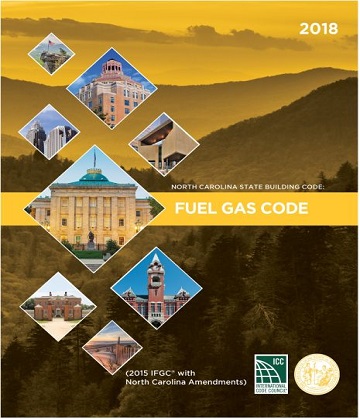
North Carolina State Building Code: Fuel Gas Code 2018 – Loose Leaf
The 2018 North Carolina State Building Code: Fuel Gas Code (NCFGC 2018) is a state-specific adaptation of the 2015 International Fuel Gas Code (IFGC), designed to regulate the safe installation, maintenance, and inspection of fuel gas systems in buildings throughout North Carolina. Effective from January 1, 2019, this code ensures that fuel gas systems—such as those for natural gas, propane, and liquefied petroleum gas (LPG)—are installed and maintained in a manner that protects public health, safety, and welfare.
$120.99
Book Overview
The 2018 North Carolina State Building Code: Fuel Gas Code (NCFGC 2018) is a specialized code that governs the installation and maintenance of fuel gas systems and appliances in North Carolina. It is based on the 2015 International Fuel Gas Code (IFGC) with state-specific amendments to address local conditions and requirements.
Key Aspects:
- Scope and Application: Applies to the installation of fuel gas piping systems, fuel gas appliances, gaseous hydrogen systems, and related accessories. Detached one- and two-family dwellings and townhouses not more than three stories high with separate means of egress and their accessory structures shall comply with the International Residential Code.
- General Regulations: Includes provisions for appliance location and installation, appliance and systems access, protection of structural elements, and clearances to combustibles. Also covers combustion air provisions for gas-fired appliances.
- Gas Piping Installations: Covers allowable materials for gas piping systems and the sizing and installation of such systems. Also addresses pressure regulators, appliance connections, and overpressure protection devices.
- Chimneys and Vents: Regulates the design, construction, installation, maintenance, repair, and approval of chimneys, vents, venting systems, and their connections to gas-fired appliances. Properly designed chimneys, vents, and venting systems are necessary to conduct to the outdoors the flue gases produced by the combustion of fuels in appliances.
- Specific Appliances: Addresses specific appliances that the code intends to regulate. Each main section applies to a unique type of gas-fired appliance and specifies the product standards to which the appliance must be listed.
Highlights:
1. Based on the 2015 International Fuel Gas Code (IFGC)
- The 2018 Fuel Gas Code integrates the 2015 IFGC, adapted to meet North Carolina’s specific regulatory and environmental needs.
2. Comprehensive Coverage of Fuel Gas Systems
- The code addresses the full scope of fuel gas installations and systems, including:
-
- Methods for sizing and installing gas piping systems
- Requirements for venting and chimneys
- Provisions for safe appliance installation, combustion air, and clearance from structural elements
3. Scope & Administrative Provisions
The initial chapters outline:
- What types of structures and systems fall under fuel gas code jurisdiction
- Permit and inspection protocols
- Classification of professionals (e.g., licensed gas technicians) and enforcement methodologies
4. General Regulations for Safe Gas Use
Detailed sections cover:
- Installation of piping, fittings, and materials for gas distribution
- Pressure testing procedures
- System accessibility requirements
These ensure safe and reliable fuel gas delivery and distribution.
5. Referenced Standards for Clarity & Consistency
- Chapter 8 provides a list of national and industry standards (such as ANSI, NFPA, ASTM) referenced within the code, helping practitioners stay consistent with proven safety practices.
About ICC
International Code Council is a leading organization dedicated to developing a single set of comprehensive, coordinated national model construction codes. To date, 48 U.S. states have adopted various international codes from the International Code Council.
Other Works:
Specifications
| Weight | 5 lbs |
|---|---|
| Dimensions | 12 × 12 × 3 in |
- Publisher: International Code Council
- Edition/Release Date: 2018, (July 1, 2018)
- ISBN: 978-1609838287
- Pages: 192
- Format: Paperback
- Target Audience: Professionals
Based on 0 reviews
Be the first to review “North Carolina State Building Code: Fuel Gas Code 2018 – Loose Leaf”
Related products
-
Business and Law, Construction, Industries, Maryland, States
Maryland, Home Improvement Salesperson Reference Guide 6th Edition
 Business and Law, Construction, Industries, Maryland, States
Maryland, Home Improvement Salesperson Reference Guide 6th Edition
Maryland, Home Improvement Salesperson Reference Manual Contractors edition is designed to provide an overview of business management subjects for general contractor examination candidates applying for a license from the Maryland Licensing Board.
SKU: 9781948558273 -
Business and Law, Construction, Industries, North Carolina, States
North Carolina – NASCLA Contractors Guide to Business, Law and Project Management, 10th Edition Spiral-bound
 Business and Law, Construction, Industries, North Carolina, States
North Carolina – NASCLA Contractors Guide to Business, Law and Project Management, 10th Edition Spiral-bound
North Carolina, Business and Project Management for Contractors, General Contractors edition is designed to provide an overview of business management subjects for general contractor examination candidates applying for a license from the North Carolina Licensing Board.
SKU: 9781948558389 -
There are no reviews yet.