
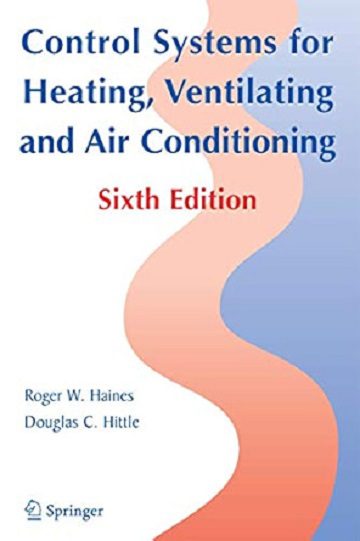
Control Systems for Heating, Ventilating, and Air Conditioning, 6th Edition
The Control Systems for Heating, Ventilating, and Air Conditioning, 6th Edition covers both hardware control systems and modern control technology. The material is presented without bias and without prejudice toward particular hardware or software. Readers with an engineering degree will be reminded of the psychrometric processes associated with heating and air conditioning as they learn of the various control schemes used in the variety of heating and air conditioning system types they will encounter in the field. Maintenance technicians will also find the book useful because it describes various control hardware and control strategies that were used in the past and are prevalent in most existing heating and air conditioning systems.
$274.99
Book Overview
The Control Systems for Heating, Ventilating, and Air Conditioning, 6th Edition provides a comprehensive exploration of control systems as they apply to HVAC (heating, ventilating and air‑conditioning) systems, bridging both classical hardware‑based controls and modern digital/energy‑management technologies. It assumes the reader has a background in HVAC systems (including psychrometrics) and presents how various control schemes are employed across different HVAC equipment types. Maintenance technicians will benefit from the book’s coverage of legacy control hardware and strategies still common in existing systems, while designers and engineers will find value in the descriptions of new digital technologies and energy management systems used in modern commercial buildings.
Key aspects:
- Comprehensive coverage of both traditional hardware control systems (pneumatic, electric, fluidic) and modern digital/energy‑management technologies.
- Balanced approach: suitable for maintenance technicians (covering legacy control strategies) and system designers/engineers (covering modern digital/system design issues).
- System‑wide perspective: covers control theory, device types, full system control, supervisory systems, central plant pumping/distribution, and retrofits.
- Unbiased toward any single manufacturer or software platform—enabling broad application across equipment brands and building types.
- Emphasis on control system design, dynamic response, tuning, and retrofit issues: bridging theory with practical application in HVAC environments.
Highlights:
- Field‑relevance: The book does not just cover new systems—it describes older control hardware and strategies that persist in existing HVAC installations, which is especially beneficial for technicians working in older buildings.
- Modern technology integration: Provides introductions and content on digital control systems, energy‑management systems, and newer control strategies in commercial HVAC design.
- Real‑world readiness: Serves as both a reference and a learning tool for engaging with actual HVAC control system issues—designing, operating, retrofitting, and maintaining.
- Well organized for learning: Chapters organized from control theory and devices → system types → digital/supervisory control → retrofit and tuning—making progression logical and instructor‑friendly.
- Dual audience appeal: Supports technicians, engineers, and building professionals alike through its balance of depth (for engineering) and accessibility (for field workers).
About Authors
Roger W. Haines is a recognized expert in HVAC systems and control engineering. He has decades of experience in both industry and education, focusing on the design, operation, and troubleshooting of heating, ventilating, and air-conditioning systems. Haines has authored multiple textbooks on HVAC and control systems, combining theoretical foundations with practical field applications to train both students and practicing professionals. His work is widely used in academic programs and technical training for engineers and technicians.
Douglas C. Hittle is an experienced engineer and educator in HVAC and building systems. He specializes in control systems, energy management, and building automation. Hittle’s expertise bridges practical system design with modern digital control technologies, emphasizing real-world application and industry standards. He has contributed to multiple editions of HVAC textbooks, ensuring content reflects both current practices and foundational theory.
Specifications
| Weight | 5 lbs |
|---|---|
| Dimensions | 11 × 8.5 × 3 in |
- Publisher: Springer
- Edition/Release Date: 6th Edition, January 19, 2006
- ISBN: 9780387305219
- Pages: 366
- Format: Paperback / Softbound
- Target Audience: Professionals
Based on 0 reviews
Be the first to review “Control Systems for Heating, Ventilating, and Air Conditioning, 6th Edition”
Related products
-
-
Construction, Industries, Plumbing, States, West Virginia
Pipefitting Level 3 Trainee Guide, Paperback, 4/E
 Construction, Industries, Plumbing, States, West Virginia
Pipefitting Level 3 Trainee Guide, Paperback, 4/E
Describes the use and inspection of basic equipment and hardware used in rigging, including slings, wire rope, chains, and attaching hardware. Explains sling angles. Describes the use of tuggers, jacks, hoists, and come-alongs.
SKU: 9780137487288 -
Alabama, Business and Law, Construction, Industries, States
Alabama, Business and Project Management, General Contractors, 3rd edition
 Alabama, Business and Law, Construction, Industries, States
Alabama, Business and Project Management, General Contractors, 3rd edition
Alabama, Business and Project Management for Contractors, General Contractors edition is designed to provide an overview of business management subjects for general contractor examination candidates applying for a license from the Alabama Licensing Board.
SKU: 9781934234556 -
There are no reviews yet.