
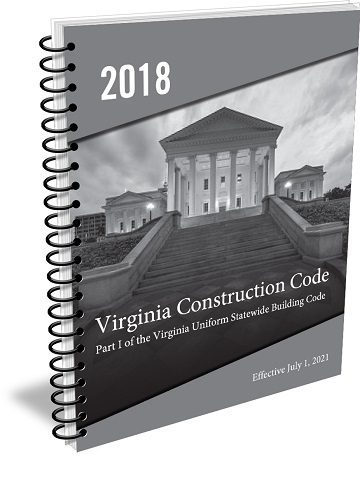
Virginia Uniform Statewide Building Code, 2018 Part 1
The Virginia Uniform Statewide Building Code (USBC), 2018 Edition, Part 1 – Virginia Construction Code is a comprehensive set of regulations governing the design, construction, and occupancy of buildings and structures in Virginia. It serves as the primary framework for ensuring public health, safety, and welfare in the built environment across the state.
$51.99
Book Overview
Part I of the 2018 Virginia Uniform Statewide Building Code—known as the Virginia Construction Code—defines the mandatory standards for constructing new buildings and structural additions across the Commonwealth. It integrates Chapters 2–35 of the 2018 International Building Code, along with state amendments, to ensure safety, health, energy efficiency, and accessibility, while striving for cost-effective implementation. Administered by local enforcement agencies, the code overrides conflicting local requirements, yet respects exceptions tied to zoning, historic preservation, and floodplain management. Its adoption is grounded in state law under the authority of the Board of Housing and Community Development.
Key Aspects:
- Adoption of the 2018 International Building Code (IBC)
- Mandatory Minimum Construction Standards
- Statewide Uniformity with Local Enforcement
- Administrative and Procedural Provisions
- Energy Conservation and Accessibility
- Legal Authority and Amendments
Highlights:
- Focus on Safety and Health: Emphasizes structural integrity, fire prevention, safe egress, and occupant protection.
- State-Specific Amendments: Incorporates modifications to the IBC that address Virginia’s unique climate, construction methods, and legal requirements.
- Applicability to New Construction and Additions: Applies to the construction, alteration, and repair of commercial and residential buildings statewide.
About ICC
International Code Council is a leading organization dedicated to developing a single set of comprehensive, coordinated national model construction codes. To date, 48 U.S. states have adopted various international codes from the International Code Council.
Other Works:
Specifications
| Weight | 2 lbs |
|---|---|
| Dimensions | 11 × 8 × 0.75 in |
- Publisher: International Code Council
- Edition/Release Date: Specify the edition and release date.
- ISBN: 978-1-95505-273-3
- Pages: 1,050
- Format: Paperback
- Target Audience: Professionals
Based on 0 reviews
Be the first to review “Virginia Uniform Statewide Building Code, 2018 Part 1”
Related products
-
Business and Law, Construction, Industries, Maryland, States
Maryland, Home Improvement Salesperson Reference Guide 6th Edition
 Business and Law, Construction, Industries, Maryland, States
Maryland, Home Improvement Salesperson Reference Guide 6th Edition
Maryland, Home Improvement Salesperson Reference Manual Contractors edition is designed to provide an overview of business management subjects for general contractor examination candidates applying for a license from the Maryland Licensing Board.
SKU: 9781948558273 -
Business and Law, Construction, Industries, States, Virginia
Virginia, NASCLA Contractors Guide to Business and Project Management, 11th Edition
 Business and Law, Construction, Industries, States, Virginia
Virginia, NASCLA Contractors Guide to Business and Project Management, 11th Edition
Virginia, Business and Project Management for Contractors, Commercial Contractors edition is designed to provide an overview of business management subjects for general contractor examination candidates applying for a license from the Virginia Licensing Board.
SKU: 9781948558457 -
Business and Law, Construction, Industries, Ohio, States
Ohio, Contractors Guide to Business, Law and Project Management 4th Edition
 Business and Law, Construction, Industries, Ohio, States
Ohio, Contractors Guide to Business, Law and Project Management 4th Edition
Ohio, Business and Project Management for Contractors, General Contractors edition is designed to provide an overview of business management subjects for general contractor examination candidates applying for a license from the Ohio Licensing Board.
SKU: 9781948558426 -
There are no reviews yet.